
R / Research
Part 107 pilots and calibrated sensors for scientific fieldwork — captured to a documented, repeatable methodology, with metadata your study can stand on.
01 / What we provide
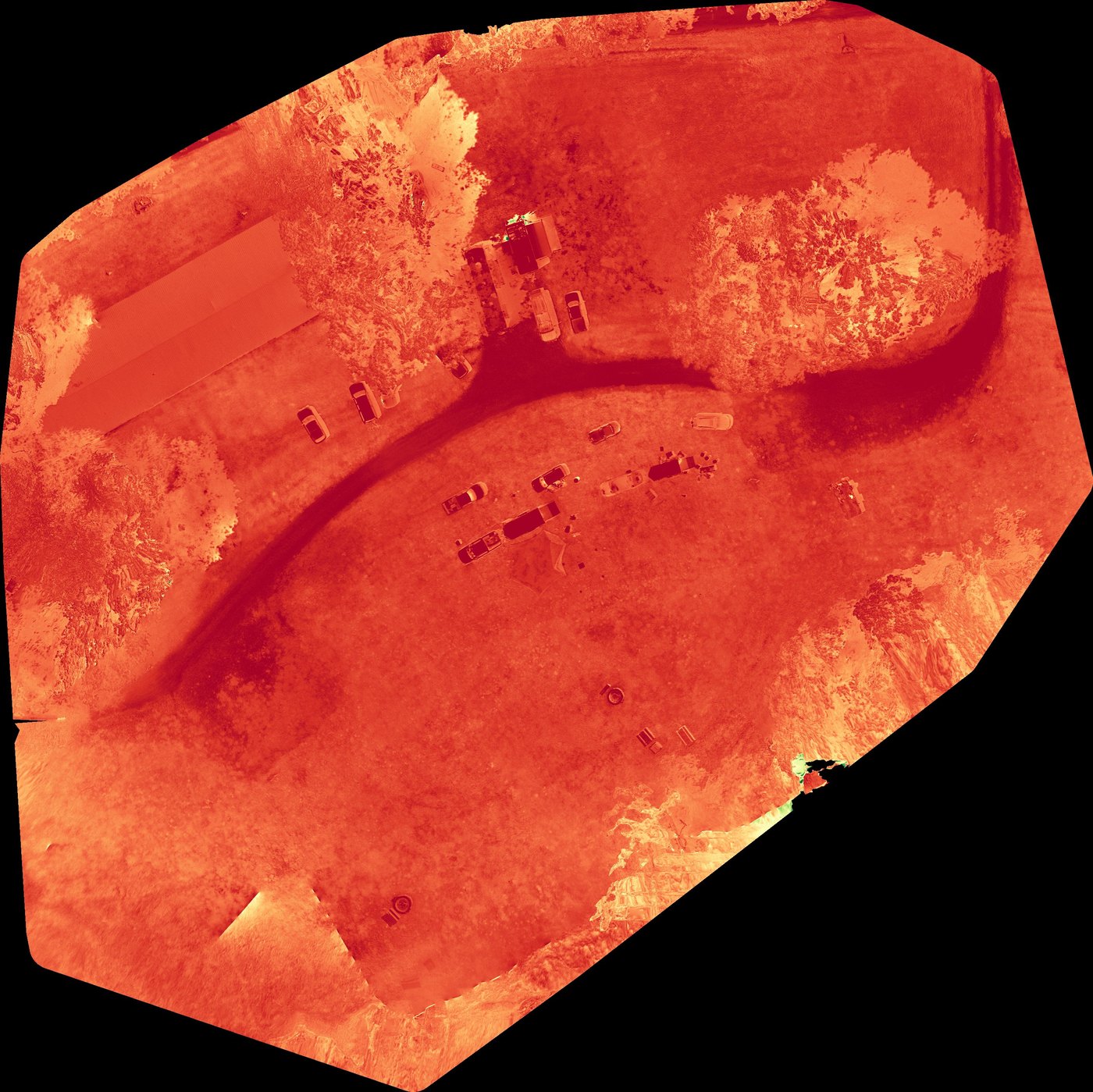
Multispectral (NDVI, NDRE, GNDVI, EVI, SAVI), thermal/infrared, and RGB — radiometrically handled so values are comparable flight to flight, not just pretty pictures.
Fixed altitude, overlap, and ground-sample-distance, flown the same way every visit. Change over time is signal, not an artifact of how it was flown.
Orthomosaics, index rasters, point clouds, and 3D models — delivered with capture metadata (date, sensor, GSD, conditions) so your methods section writes itself.
02 / Who we work with
Thesis and grant fieldwork in agronomy, ecology, forestry, hydrology, and remote sensing — without your lab buying and maintaining a UAS program.
Monitoring programs, habitat and vegetation assessments, and repeat-survey change detection with documentation that holds up to review.
Trial plots, treatment comparisons, and site assessments where the data has to be defensible to a client or a regulator.
03 / Why UUAS
UUAS is operated by a graduate aviation-safety researcher (MS Aviation, Safety & Security Management — MTSU) who treats data collection like a protocol: planned, hazard-assessed, flown, and reviewed under a formal Safety Management System. That’s the difference between a clip and a dataset.
How it works: tell us the study design and the variable you’re measuring — we translate it into a flight plan and data spec, capture it, and hand back clean, documented deliverables (and repeat visits on the same spec if your study needs a time series).
04 / Sensors & outputs
New to the indices? Start with our guide to what NDVI actually tells you, then bring us your study design.